
Voice Acting Books & Podcasts Every Voice Actor Should Know
Build your voice acting toolbox with these books and podcasts recommended by Voicelings.

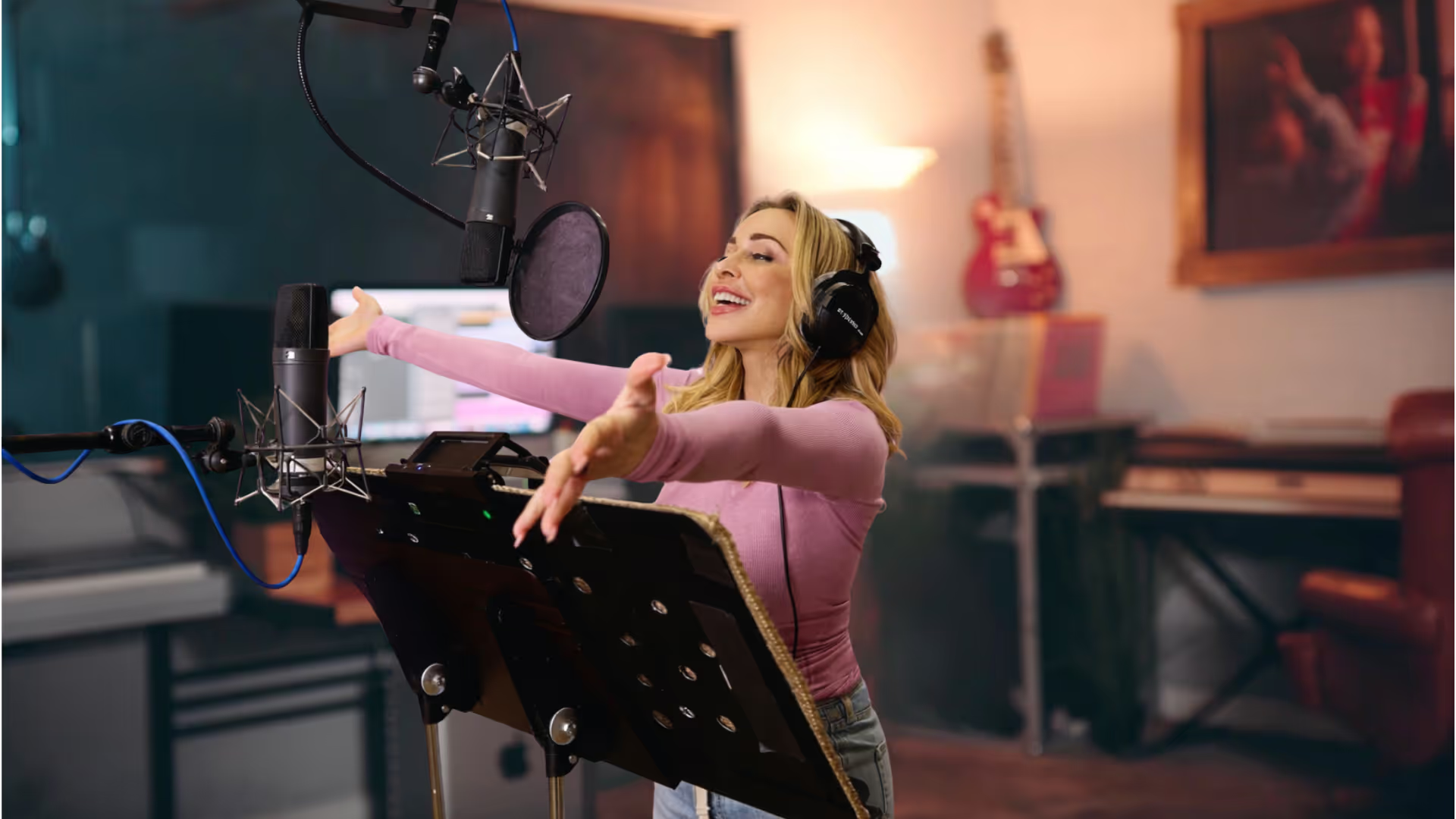
If you’re curious about voice acting, auditioning, or are finally ready to take your VO dreams seriously, I’m here to help you build a simple, professional home studio that works.
Whether your goal is to become a voice actor for TV, films, commercials, audiobooks, or video games, there are a few things you’ll need to get started. But I'm going to let you in on a little secret...
You don’t need a perfect studio.
You don’t need to spend a fortune.
You do need the right fundamentals.
I'm sharing exactly what you need to get started as a voice actor, from equipment and setup to mindset. We don't gatekeep around here, y'all!
Let’s start with your space.
There isn’t one “right way” to record. Some actors prefer standing for energy, while others (like me) sit to stay grounded and comfortable during longer sessions. What matters is having the option to sit or stand, a setup that doesn’t distract you, and a space that feels good to work in. Small rooms work especially well, and even a closet can become a great booth. Your space doesn’t need to be fancy, it just needs to be comfortable, quiet, and feel good to you.
People often think they need expensive acoustic foam or a custom-built space – not true. But you should be in a quiet area away from loud appliances, windows, and noisy neighbors. Carpet softens sound, reduces echo, and helps your space feel warm and cozy. Some of my students swear by their blanket forts. Others? Pieces of styrofoam to do the trick and drown out unwanted background noises. Get creative, try different things, and always test your audio to see what’s working and what’s not.
People often ask whether they need a powerful, fancy computer for voice acting. The truth is: no. But you do need a device that can handle recording, editing, and submitting files for auditions. I prefer a desktop computer over a laptop because desktops run more smoothly and quietly, without fan noise. But again, it’s up to you.
An internet connection gives you access to auditions, submission services, scripts, virtual callbacks, applications, and more. It will allow you to record and submit audio for a variety of jobs without ever leaving home.
Let’s talk microphones – because they matter.
Choosing a mic can feel overwhelming with so many options and price points. I’ve used everything from high-end industry staples like the Neumann U 87 to more accessible home-studio favorites like the Rode NT1-A, and they have one thing in common: clarity, warmth, and reliability. These are the kinds of microphones real voice actors use every day because they capture nuance and emotion without getting in the way of the performance. If you’re just starting, there are also excellent, budget-friendly options recommended by the Voicelings community that will help you record clean, professional auditions. I like to purchase my mics from Sweetwater or Amazon.
A mic stand or boom arm holds your microphone in place, even as you move to achieve the desired sound. You'll also need a shock mount to go with your mic stand or boom arm. A shock mount is designed to hold the mic in place while isolating it from the stand, preventing mechanical noise from reaching your audio.
A pop filter attaches to the front of the microphone to block the air from your mouth while speaking. Specifically, pop filters minimize harsh pops that occur when pronouncing certain sounds called plosives. Without a pop filter, pronouncing letters like "P" or "B" can create a harsh spike in your recording.
Oftentimes, you can find a microphone bundle with the mic stand and pop filter to go with your chosen mic.
Your mic needs an audio interface (an additional piece of hardware) to convert microphone signals into an audio format your computer can use. It also connects your computer audio to your headphones and studio monitors. It sounds complicated, but I promise it isn’t. I swear by the Focusrite Scarlett. It’s simple, professional, and easy to use. It’s one of the most recommended audio interfaces for voice acting.
Studio headphones are a must in any professional voice acting setup. They allow you to hear your performance: the nuances, breaths, tone shifts, clarity, emotional delivery, and any subtle mouth or room sounds. Good headphones help you train your ear, improve your craft, and communicate clearly during remote directed sessions. You don’t need to overspend, but don’t go super cheap either. Go to Amazon and search for the top-rated ones. My Voicelings like the Audio-Technica models, like the ATH-M20 and M50x (these are the ones I use), and the Beyerdynamic DT 770.
Here are my Kwik Tips for using headphones in the studio.
Audacity is one of the best free tools out there for recording and editing voiceover. It’s beginner-friendly, easy to learn, and powerful enough for auditions, practice sessions, and projects. You can record clean takes, trim mistakes, remove background noise, adjust levels, and export high-quality audio files without needing a fancy DAW. As you grow, voice actors may move to Adobe Audition, a professional-grade DAW for serious recording and editing for multi-track sessions, advanced noise reduction, integration with other Adobe apps, effects, editing, real-time noise suppression, and tools.
Being a pro voice actor isn’t just about gear – it’s about how you show up for yourself and others.
When you combine:
You have all the ingredients to record professional-quality voiceover from home.
Voice acting isn’t about having the fanciest setup. It’s about showing up as your best self with curiosity, confidence, and a positive mindset.
That’s why I created Voicelings. It’s a place to learn at your own pace, connect with other voice actors, get guidance from me, hear about audition opportunities, and be a part of live calls with Hollywood legends. Be part of the best voice acting course and community out there.
You're one step away from finding your voice and joining a community of passionate voice actors!


To be the best, you have to learn from the best – and for me, that's Tara Strong. This course really helps you step out of your comfort zone and into character.
Verified from
Tara does an amazing job walking you through the experience with auditions and callbacks, and what to expect during those things, and when you book a job.
Verified from
Whether you're just getting your feet wet or you're a veteran in the business, she has something for everybody.
Verified from
What I like most is it's online, self-paced, and taught by Tara Strong – someone I’ve admired since I was a kid when I first heard her as Baby Dill.
Verified from